 HD
HD
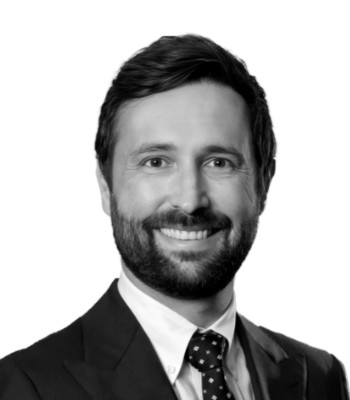
Hayden Delaney
Qui contractus inter terras et hemispheria scribit
— who writes contracts across continents and hemispheres
— On the schedule —
Beyond copyright: IP strategy in the age of generative AI
Problem space
In March 2026, Anthropic's build configuration shipped the source map of Claude Code into production by accident, putting the entire source code of the company's flagship coding product on the internet overnight. The Digital Millennium Copyright Act takedown blitz that followed wiped 8,100 GitHub repositories in a single night. The code is still everywhere.
The incident is, for software businesses, a stress test of a copyright regime built for a pre-AI world. The deeper issue is doctrinal. Copyright protects the particular expression of an idea, not the idea itself. That distinction, the idea/expression dichotomy, has always been sensible: it allows independent invention and ensures copyright does not lock up ideas. Generative AI now exploits it with precision. A developer using an agentic AI tool can produce a functional equivalent of a copyrighted product in hours, with output that bears none of the textual hallmarks that would establish infringement. The economic moat copyright provided, the time and skill cost of producing a non-infringing equivalent, has collapsed.
For the open-source ecosystem the implications are direct. The licence-based control structures the software industry depends on, from Apache 2.0 to GPL, rely on the underlying copyright to bind downstream users. There is also a cryptographic dimension worth taking seriously. Material ingested into a model's training data may never be cleanly recoverable, even if every public copy is taken down. "Harvest now, derive later": the model becomes, in effect, a permanent compressed archive of works it has read.
Approach
The session opens from the Anthropic incident as a worked example and traces the doctrine to its breaking point. It first establishes where copyright is doing less work in the age of generative AI: the takedown apparatus, designed for identifiable copies; the substantial similarity test, designed for textual reproduction; and the remedies regime, designed for actors a court can reach. It then identifies where copyright still does indispensable work, particularly as the legal foundation for open-source licensing and moral rights. Finally it maps the alternative IP regimes that need to share the workload: patents (which protect the method side of the dichotomy that generative AI most easily reproduces), confidentiality and trade secrets (whose practical content has changed in the age of public AI services), and contractual frameworks (which do work that copyright alone cannot).
Key takeaways for attendees
Why the idea/expression dichotomy, long a sensible doctrinal line, has become the precise vulnerability that generative AI exploits, and what this means for code whose competitive value sits in its functionality.
How the takedown apparatus and the substantial similarity test interact with material that has been absorbed into model weights, and why the remedies story compounds the problem for rights holders.
What copyright still anchors that no other regime can: open-source licence enforceability, end-user agreements, moral rights, and damages claims against identifiable defendants.
Where patents and confidentiality regimes do work that copyright will not in the AI era, and the practical and structural costs of using them.
A working framework for choosing IP regimes deliberately, asset by asset, for projects, including open-source ones, whose value sits in their code.
— Compositor's note —
Hayden acts for well-known software vendors, organisations undertaking complex technology projects, government agencies, and clients across fintech, defence-tech, medtech and artificial intelligence. He also advises clients in regulated industries including health, education and financial services on technology, privacy and security risks. He holds law and IT qualifications.He helps clients manage data risks, comply with privacy and security obligations and respond to cyber incidents. He speaks regularly at major cyber security and technology conferences including RSA in San Francisco and AusCERT.Hayden’s combined law and IT qualifications allow him to grasp quickly how technologies affect a client’s legal and commercial position. He is known for being commercially pragmatic, responsive and able to translate complex technology and regulatory concepts into clear, actionable advice for boards and executive teams.